Tavrek Larchbrace - Sled-Wright & Harness-Mender
Hobgoblin sled-wright Tavrek Larchbrace builds sleds and mends harness at the Sled-Team Yard inside Frosthold's North Gate, and loads every one before it leaves. Repairs, a sled to buy, a tip about the gate, and a rush order that doesn't add up.

Introduction
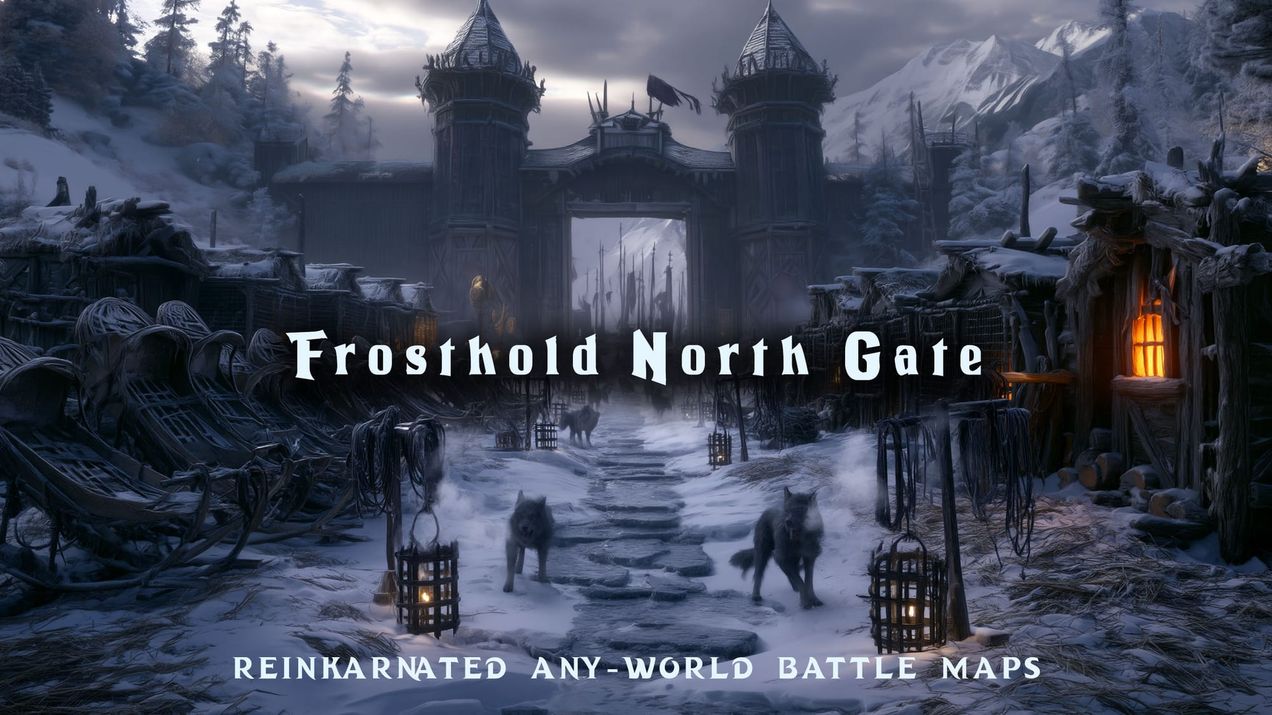
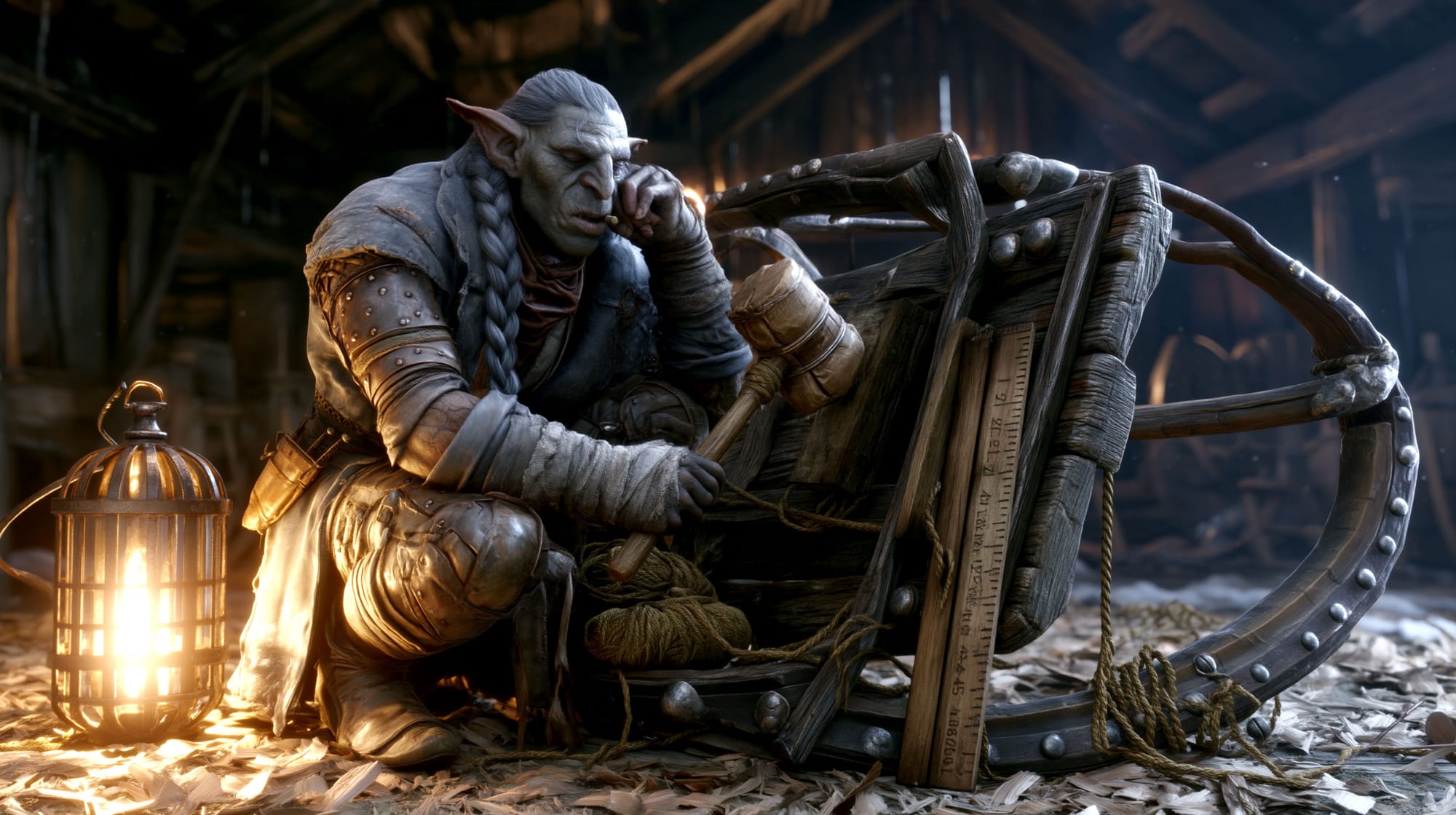
Most travelers hear the Sled-Team Yard before they see it. Barking and howling, leather creaking, metal scraping ice: step in through the North Gate, past the caged lanterns, and the noise sorts itself into jobs. The dogs belong to the kennels. The steady rap of wood on wood from the last low shed along the racks belongs to someone else. Follow it past the sleds stacked nose-to-tail with their runners in the air, and you will find a hobgoblin in an oilskin coat tapping a sled's brace with a mallet and listening, head tilted, to what the wood says back.
Profile
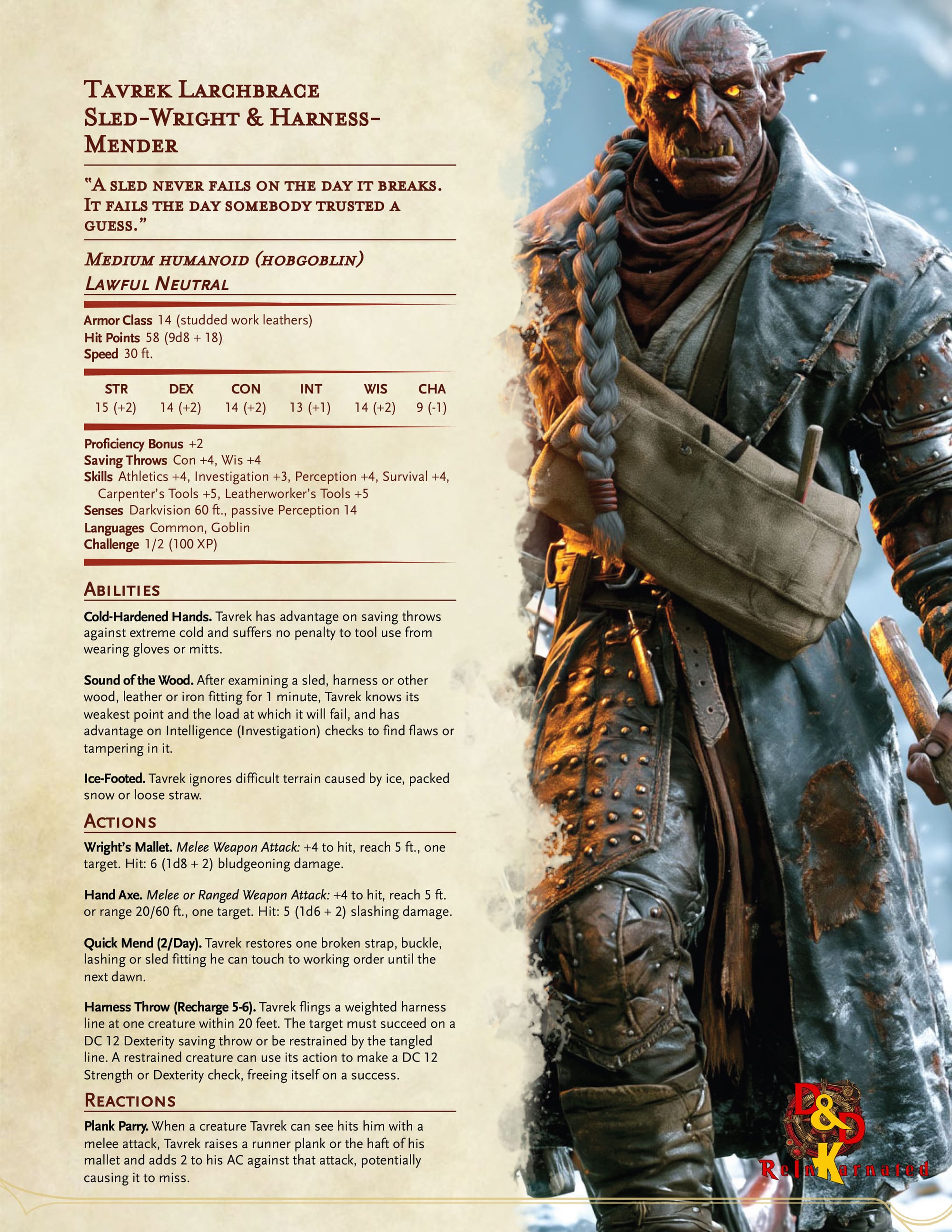
Name: Tavrek Larchbrace
Race: Hobgoblin
Gender: Male
Alignment: Lawful Neutral
Role/Class: Sled-Wright & Harness-Mender
Challenge Rating: 1/2
"A sled never fails on the day it breaks. It fails the day somebody trusted a guess."
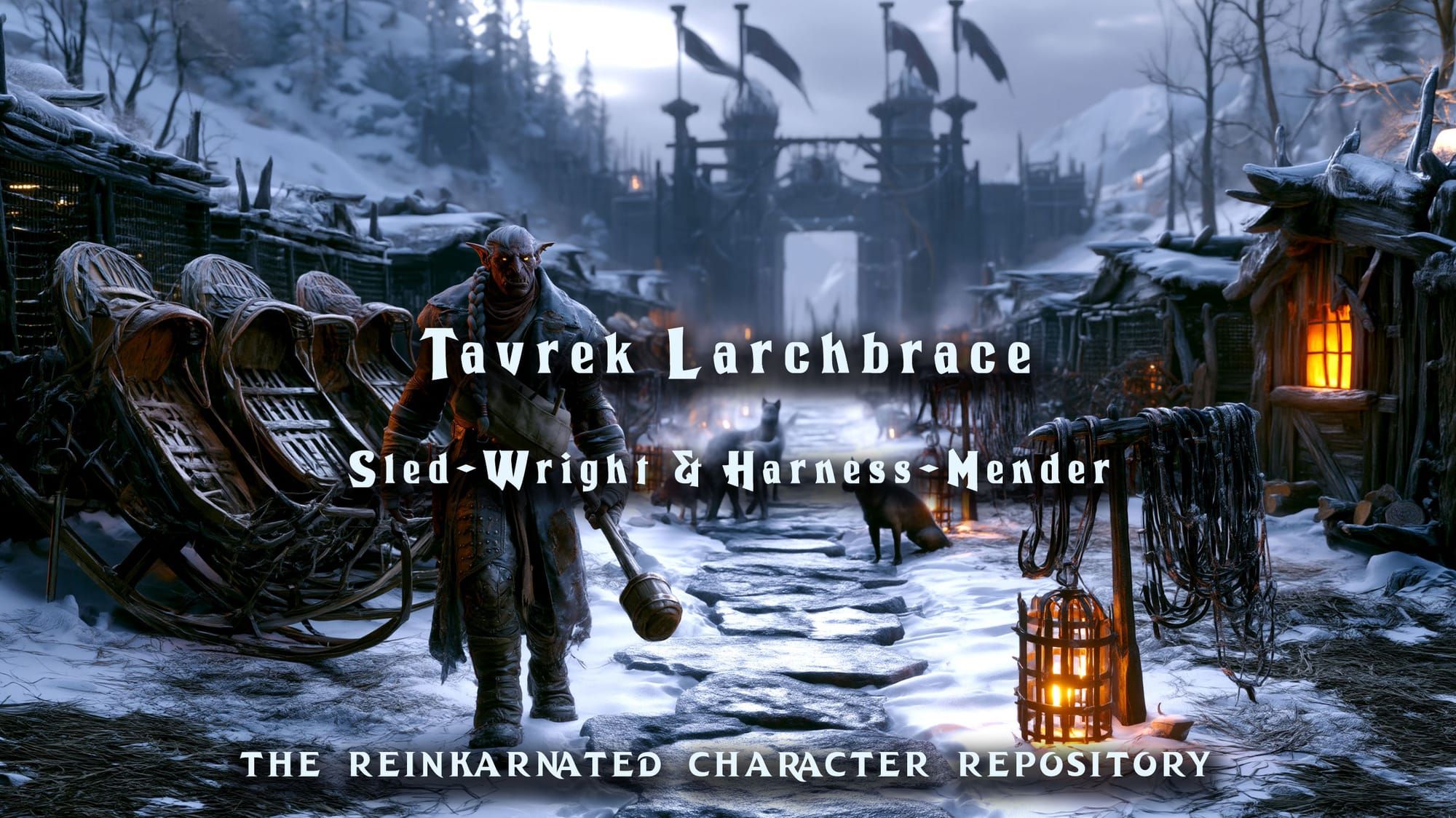
Appearance: Tavrek is a wiry, long-armed hobgoblin in his middle years, skin the dark rust of old iron and every knuckle chapped white by the cold. His ash-gray hair is worked into a single tight braid and pinned up out of the way with a wooden peg, and one pointed ear carries a small notch from a saw slip long ago, with a carpenter's pencil tucked behind it. His eyes are a flat amber-yellow that rarely leave whatever his hands are doing. He wears a patched oilskin coat over studded work leathers, fingerless gloves, and a broad canvas tool roll slung across the chest. A notched wooden story-stick, as long as an arm, rides down the back of the collar like a second spine. Tavrek smells of pine pitch, hot iron and beeswax, and the sound of him approaching is a low, even tapping, as if he were counting something.

Backstory
Tavrek learned the trade south of the snow, building grain carts and mending wagon wheels, and his first sled was a bad one. It cracked its brace on the first hard haul, and Tavrek spent the rest of that winter taking it apart to learn why. He came north walking beside a caravan's wagons, mending as the wagons went, and the first deep cold of the Whispering Tundra broke three of that caravan's sleds in a single week. Tavrek stayed to fix them. The caravan went south at the thaw without him, and Tavrek never saw a reason to follow.
His shed is the last of the low sheds at the gate end of the Sled-Team Yard, and the work is simple to describe. Tavrek builds sleds, mends them, and mends the harness that joins them to the teams, working wood, leather and iron at one bench. He keeps no dogs and drives no teams. That is Kethra Whitepaw's domain, and Tavrek treats it with the respect of someone who has watched her settle a snarling lead dog with a look. Kethra keeps a small book on every animal. Tavrek keeps a ledger on every sled: who ordered it, what it was built to carry, and which joint he expects to fail first.
Everything else about a sled is arithmetic to Tavrek. He chooses wood by the sound it gives when rapped, cuts every brace to a length measured on the story-stick, and will not call a sled finished until it has been loaded to the weight it was built for and dragged the length of the Yard. Drivers grumble at the wait and come back anyway. When a driver walks in with hands too frostbitten to buckle a strap, Tavrek mends the harness and sends the driver down to Odel "Sealstitch" Garr for the mittens, because clothing is not his trade and he says so plainly. Thrain Stoneweather walks the racks before each convoy season and says almost nothing, and Tavrek counts a nod from him the way other makers count a signed certificate.
The Ice Patrol's spare harnesses come to the Yard for mending when they wear thin, and Tavrek returns them with a tag on each buckle noting what was replaced. Varrik Stormsign has never asked for the tags. He reads every one.
Personality
- Loads It First. Tavrek will not call anything finished until it has carried the weight it was built for. A deadline is a request. A load test is a rule.
- Speaks in Measurements. Ask how long a job will take and the answer is "a day and a half, and the half is for the brace." Ask how he is, and the answer is the weather and the wind direction.
- Dry, Not Cold. Tavrek's jokes land half a beat late and are delivered to the sled rather than to you. A customer who laughs at the right moment has just earned a better price.
- Respects Honest Questions. Ask what a part does and Tavrek will explain it until you can repair it yourself. Say "good enough" and the shed goes quiet.
- Stays in His Lane. Tavrek does not keep dogs, does not hire drivers and does not sew. He will say so, politely, and point to whoever does.
- Mends in Silence. While a hammer, awl or needle is in hand, Tavrek does not talk. Wait until the tool is down, and he will give you his whole attention.
Secrets
- The Sled That Was Not Loaded. Early in his years at the Yard, a rush order and a tight deadline led Tavrek to ship a sled he had measured but not loaded. It held for a week and then folded under its driver on open ice. The driver came home with both hands, thanks to luck and a quick team, and never said a word of blame. That silence is why nothing now leaves the shed unloaded. Tavrek would rather lose a customer than live through that week again.
- The Tally Under Every Sled. Beneath each sled Tavrek builds or overhauls, at the joint he judges will fail first under a full load, a tiny tally mark is burned into the wood. Tavrek believes every sled has one honest weakness and that saying so aloud only frightens buyers, so the mark sits where only another wright would think to look. A character who finds it can reinforce the joint, and Tavrek will take that as the best compliment a stranger can pay.
- The Spare Behind the Shed. Hidden behind the gate-side shed under a patched canvas stands one complete sled, runners shod, kept in no ledger and offered to no one. Tavrek built it for the night the bells ring and every other sled in the Yard is already spoken for. He has never sold it on a slow day, and has never told anyone it is there.
Gear and Loot
- Wright's Mallet: a long-handled hardwood mallet with a leather-bound striking face, its haft worn dark in the shape of Tavrek's grip. It is used to test a joint and, when needed, to end an argument.
- Story-Stick: a notched ash rod as long as an arm, scored with years of measurements Tavrek will not translate. In his hands it is a ruler, a level and a record in one.
- Hand Axe: a short-hafted axe kept razor-sharp for trimming runner stock. Good for throwing in a pinch.
- Tool Roll: carpenter's tools and leatherworker's tools in waxed canvas, including a draw knife, brace and bit, awls, a stitching palm, and a small mallet for setting rivets.
- Spare Harness Hardware: a tin of buckles (6), iron rivets (20), cotter pins (12) and a coil of waxed thread. A driver in trouble would pay 10 gp for the lot.
- Heatstone and Sled-Lamp: a palm-sized heatstone wrapped in felt, and a small caged lantern for working in the dark hours before first light.
- Order Ledger: a battered book listing every sled Tavrek has built or overhauled, with the driver's name, the intended load and a pencil sketch of the underside.
- Coin Purse: about 21 gp and 40 sp in mixed coin, plus a stack of paid deposit slips.
Non-Combat Abilities
- Hears a Flaw. Tavrek can rap any sled, harness or wooden tool and tell within a minute where it will fail first and under what load.
- Builds and Mends. Proficient with carpenter's tools and leatherworker's tools, and a skilled hand with a vehicle (land) on the ice.
- Reads a Load. Given a description of the cargo and the route, Tavrek can name the sled, runner width and lashing it will need.
- Works Through Cold. Tavrek's hands do not stiffen in the cold, and he can stitch, rivet and set a brace in conditions that stop most people.
- Speaks Common and Goblin.
- Repairs at the Bench. Tavrek mends anything of wood, leather or iron that rolls, slides or straps, at these prices. A sled Tavrek has overhauled gives its driver advantage on the first ability check made to avoid a spill or breakage on the journey ahead.
- Mend a harness line or strap: 5 sp each, 10 minutes.
- Fit a replacement buckle, rivet or lashing: 1 sp to 5 sp.
- Re-shoe a runner: 1 gp per runner, about an hour.
- Replace a cracked brace or lashing point: 2 gp, about 2 hours.
- Full overhaul of a sled, every joint checked, loaded and tested: 8 gp, one day.
- Pack frames, snowshoe bindings, shield grips and crampon straps: 1 sp to 5 sp.
- Rush work costs double, and Tavrek will say aloud which part he did not have time to test.
- A Sled to Buy. Tavrek sells a trail sled for 30 gp (the usual price is 20 gp). It is braced at the runners, has lashing points set where the load actually sits, and carries a spare strap and buckle under the seat. Its driver has advantage on the first ability check to avoid a spill or breakage on each journey. Tavrek sells sleds, not dogs. For a team, send the party to Kethra. Before he sells, Tavrek asks what the sled will carry and how far, and he will decline to sell to anyone whose answer does not add up.
- A Word About the Gate. Tavrek watches every sled that comes back through the North Gate, and the scuffs on the runners tell a story. The center of the Runout is polished to glass by passing runners, and a loaded sled slides on it instead of gripping. Tavrek's advice is to keep a runner-width off the shine, where the packed snow still bites. A party that takes the advice has advantage on the first check to launch cleanly out of the gate. A party that ignores it still gets out, but expect the sled to swing.
Roleplaying Tips
- Keep a rhythm of tapping on tables, rails and anything wooden. Stop only when you want players to feel the room go quiet.
- Answer every question with a measurement first: lengths, weights, hours. Let the feeling come second, and sparingly.
- Put a hand on any object a player picks up. Turn it, weigh it and say what is wrong with it.
- Do not talk while working. Pick up a prop (pencil, pen, die) and let the table wait until you set it down.
- Praise by count, not adjective: "That's four rivets, all seated." From Tavrek that is warm.
- If a player says "good enough," stop talking. Let the silence do the correcting.
Adventure Integration
- The Wrong Sled. A rush order is on Tavrek's bench: one freight sled, paid in full up front, to be collected at first lantern. Tavrek built it to the drawing, then did what he always does and loaded it, and the numbers do not belong together. The bed is nine feet long and barely two feet wide. The lashing points are set for one long, heavy thing, not freight. The runners are spaced for a narrow trail, not a convoy road, and the left brace is doubled, as if the load leans. The slip names no buyer, only a time and a strip of blue cloth to show at pickup. Tavrek will not hand over a sled he does not understand and will not break a paid order either, so he asks the party to learn what it is for before the lantern changes. Leads: the youngster who carried the slip and remembers only a stranger's boots, the measurements themselves (Investigation DC 12 narrows the shape to a few possibilities), and the pickup, which Tavrek will let the party watch from the shed rafters. The DM decides the answer: an honest mix-up of two orders, a rescue that someone cannot ask for openly, a smuggler's run, or a prank on Tavrek. Whatever it is, the party ends holding the decision about whether the sled leaves the Yard.
- Proof Load. Tavrek will not sell a freight sled until it has been loaded and run. Short on hands, he asks the party to ride a laden test sled down the Runout, out to the first flag-line junction and back, calling out every creak, drift and slip as it happens. Tavrek rebuilds the sled from what the party reports, so honest, specific reporting is the whole challenge. A wrong report costs a repair bill, and a right one earns the party a better sled.
- Second Opinion. A driver is telling anyone who will listen that a Tavrek sled "pulled left" and ruined a delivery. The wreck still lies out on the ice with its load, and Tavrek asks the party to bring it in untouched, along with the lashings and the driver's account. Was it the sled, the load, the team or the hand on the reins? The answer will sting somebody, and Tavrek wants it even if it stings them.
- One More Sled. The bells ring for a call-out, and the Yard is one sled short for the crews that must go. Tavrek wheels out the spare from behind the gate-side shed, its runners not yet waxed and one lashing point not yet seated. The party has the time it takes the other crews to hitch to finish it, in a run of cold-fingered skill checks, and then must decide whether the sled goes out carrying a flaw Tavrek will name aloud.
Conclusion
Tavrek Larchbrace is the maker behind everything that rolls out through the North Gate. In a town where a sled is the difference between a delivery and a loss, he builds each one to carry the weight it was meant for, tests it before it leaves, and stands behind it for as long as it runs. He answers honest questions with honest measurements, rewards careful drivers with better work, and treats a repair bill as a promise. For a party, Tavrek is the craftsman who keeps a journey moving, the patron whose quiet requests lead out into the snow, and a reminder that the road starts at the bench. Drop him into any snowbound town with a gate, a yard and a winter that tests everything, and he will be the one who made the thing that held.