
Role in Its Society:
Saelith occupies a strange place among harpies, standing apart from flocks that rely on brute ambush or mindless predation. Where others hunt for food or treasure, Saelith hunts for voices—grief-stricken travelers, exiles, and the emotionally broken. She believes sorrow sharpens the soul, and that those who wander with heavy hearts deserve to be claimed by song.
Among harpies, Saelith is both feared and sought out. Her voice is said to carry farther and linger longer than others, capable of reshaping melodies into personal laments that mirror the listener’s regrets. Lesser harpies sometimes follow her at a distance, feeding on those she ensnares but never daring to interrupt her rituals.
To nearby settlements, Saelith is not known as a monster at first. She is known as a sound—a distant, mournful refrain heard at dusk or before storms. By the time her presence is recognized, travelers have already begun vanishing, leaving behind campsites arranged as if someone had simply… stood up and walked into the sky.
Appearance Description:
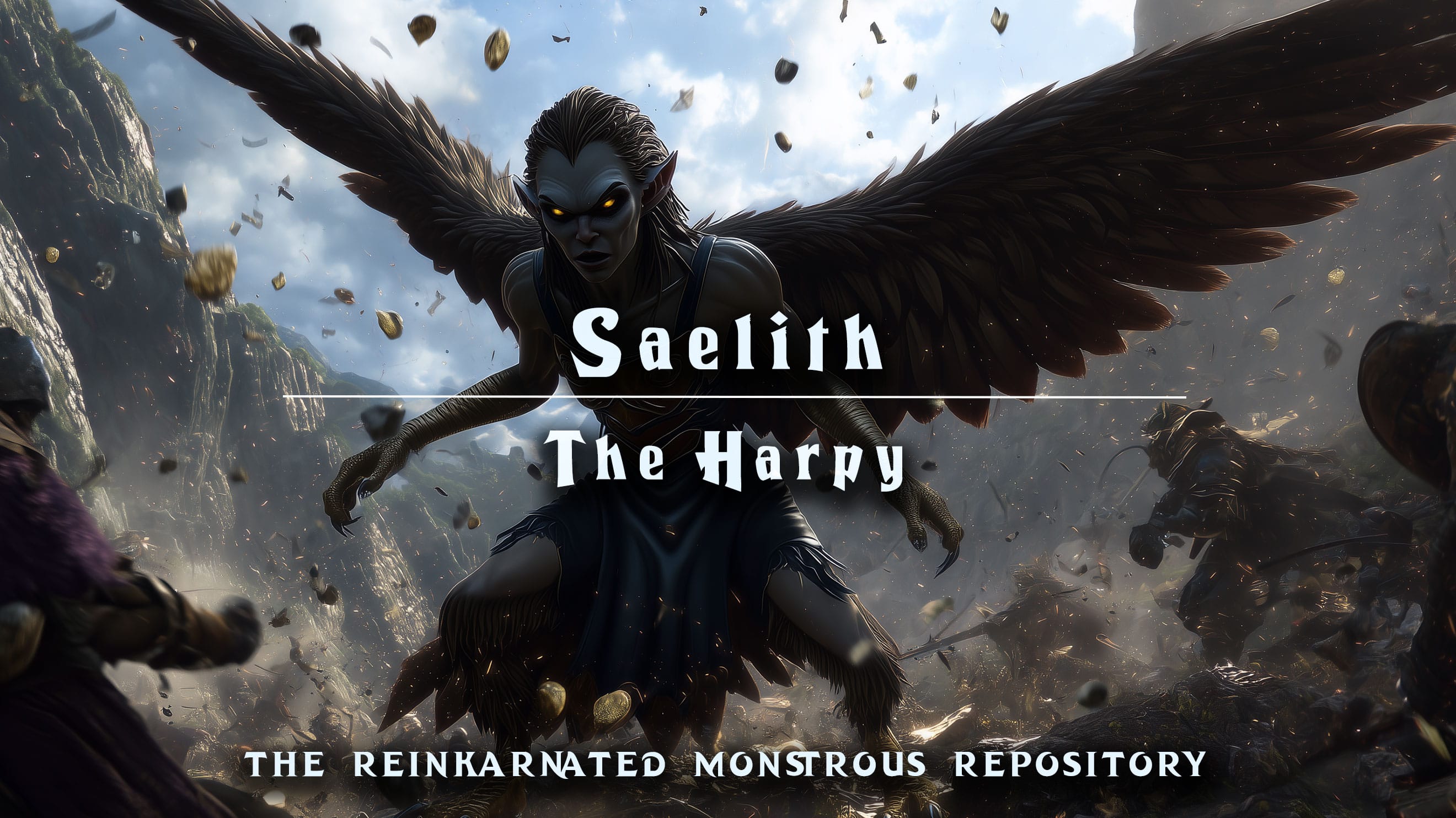
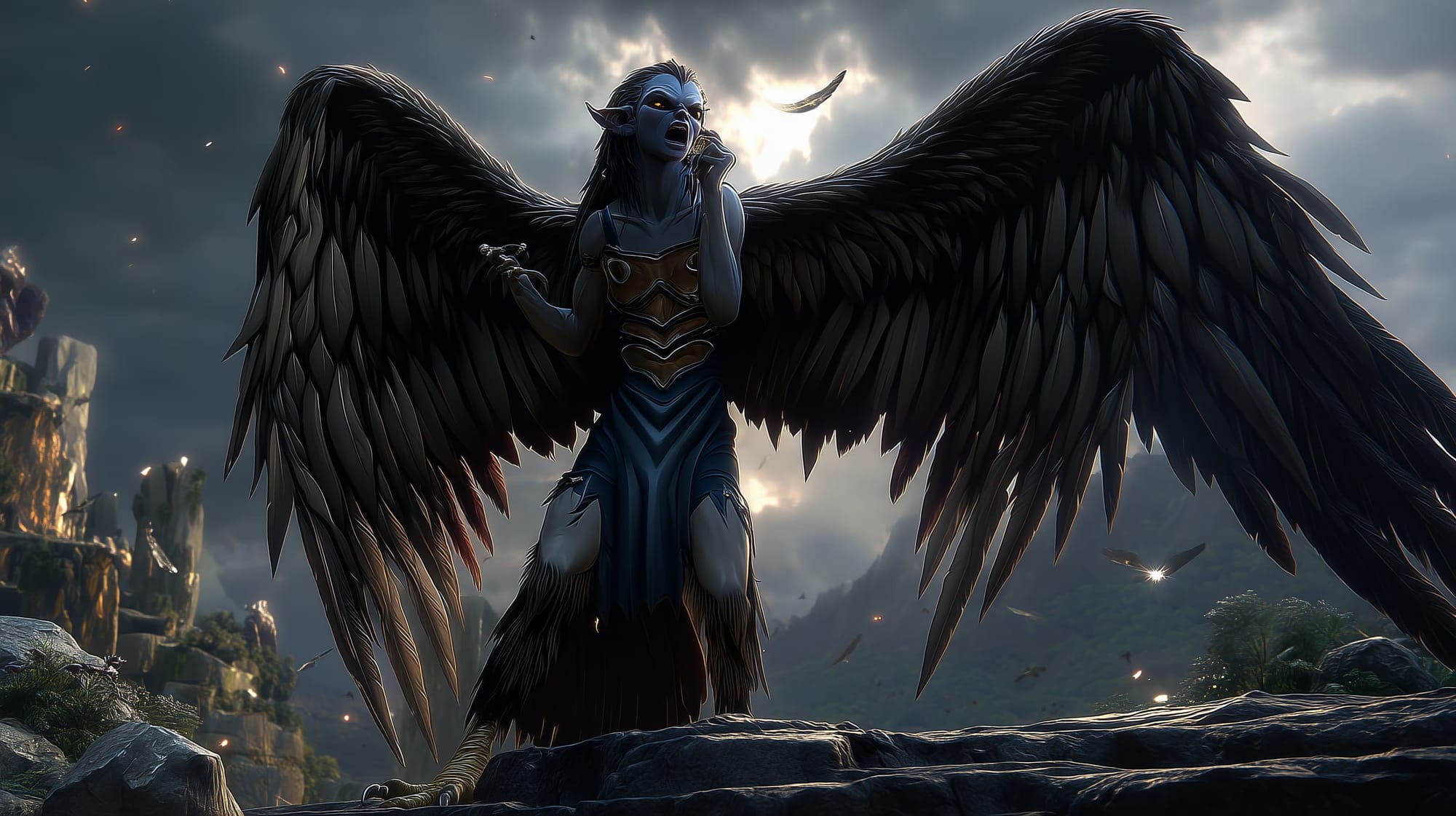
Saelith’s upper body bears the unmistakable form of a gaunt humanoid woman, her skin pale and weathered like stone bleached by sea wind. Her ribs subtly show beneath taut flesh, and faint scars ring her wrists and throat—self-inflicted marks left from ritual fasting and vocal discipline.
Her wings are vast and asymmetrical, composed of dark, mottled feathers ranging from ash-gray to oil-black, many broken or regrown incorrectly. These wings emerge not cleanly from her back but tear through flesh and sinew, leaving permanent, raw seams that never fully heal.
Below the waist, Saelith’s body transitions into powerful avian legs ending in talons capable of gripping stone or flesh with equal ease. Her face is sharp-featured and predatory: hollow cheeks, a hooked nose, and eyes that glow faintly gold when she sings. When silent, her expression is mournful. When singing, it becomes rapturous.
Backstory:
Saelith was once a singer in a border settlement famed for its funerary rites. When war claimed her homeland, she survived by singing the dead to rest—night after night, voice cracking, throat bleeding, refusing to stop until every name was spoken.
When raiders finally came for her, drawn by the sound, she did not flee. She sang. The song twisted, fueled by grief and desperation, and something answered. By dawn, the village lay empty, and Saelith stood alone—changed, winged, and unable to stop singing.
Unlike other harpies who revel in predation, Saelith believes her transformation was a mercy. She now seeks out those burdened by unresolved loss, convinced that if she sings them into the sky, they will finally be free. Whether this belief is delusion or truth no one can say—only that none who follow her song ever return.