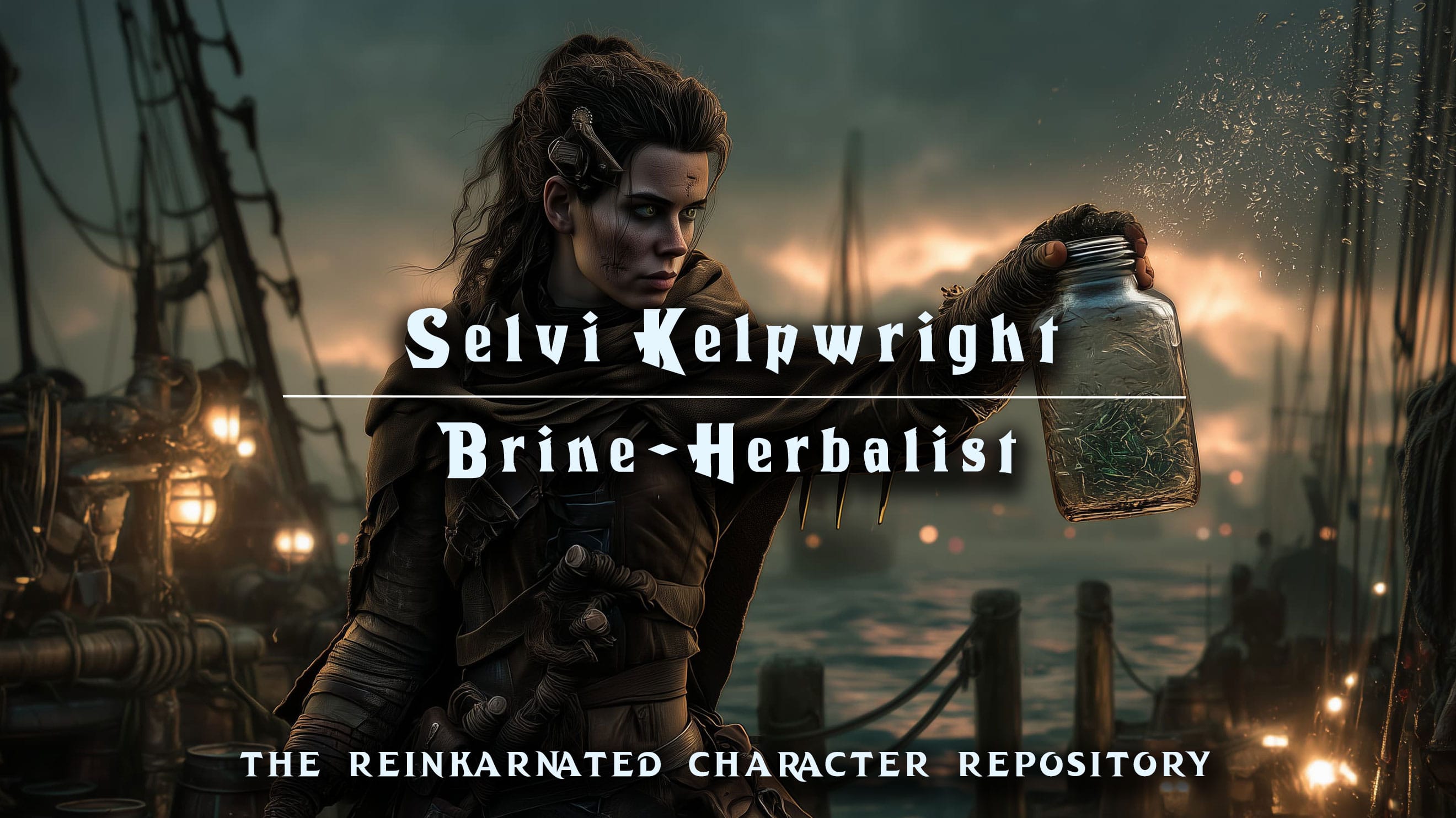
Selvi Kelpwright – Brine-Herbalist
“Salt stings because it cleans. The sea doesn’t hate you—it just refuses to lie.”

Name: Selvi Kelpwright
Race: Human
Role/Class: Brine-Herbalist
Appearance: Selvi Kelpwright has the weathered glow of someone who lives half her life outdoors: sun-browned skin, wind-reddened cheeks, and hands permanently rough from rope, shells, and mortar stone. Her hair is sea-dark and usually tied up in a loose knot, held with a carved bone pin shaped like a hook. Her eyes are green-gray, the color of kelp beds seen through surf, and they sharpen quickly when someone’s limping.
She wears a practical layered dress under a short oilskin mantle, with a leather satchel packed with jars, bandages, and wrapped bundles of dried plants. Her belt holds a small cleaver for cutting kelp and a pestle corded to her hip. Around her neck hangs a string of smooth sea-glass beads, each one etched with tiny scratch marks—private reminders of storms survived and people saved.

Backstory
Selvi was born inland, and the Bluffs were never meant to be her home. She came to Heathdun as a young healer hired to tend dock crews—just a season of work, she told herself. But the harbor has a way of keeping people. Wrecks don’t wait for schedules, storms don’t care about contracts, and injuries in Heathdun aren’t gentle. Rope burns that peel skin. Barnacle cuts that fester. Cold-lung that turns a cough into a death sentence by the third night.
Selvi learned fast. She stopped relying on imported herbs that arrived late and spoiled in sea air, and began studying the coast itself. Kelp beds. Salt grasses. Tidepool fungi. The bitter fronds that grow only in the shadow of certain cliff faces. She learned which plants draw infection and which ones seal it, which seaweeds reduce swelling and which ones numb pain just enough to keep a sailor working.
Her skill became indispensable. Her stall—half clinic, half apothecary—sits near the lift yard where injured workers can reach her before they collapse. Selvi charges fairly, often sliding a jar across the table without asking coin when she knows a crew has had a bad week.
That generosity has made her enemies.
Some brokers hate that she treats “unregistered” wreck-salvers and smugglers who pay in favors instead of scrip. Some dock bosses hate that her remedies keep workers from becoming desperate enough to accept abusive terms. And Selvi herself hates one thing above all: the quiet acceptance Heathdun has for suffering as “the price of doing business.”