Gnashburrow - The Ankheg
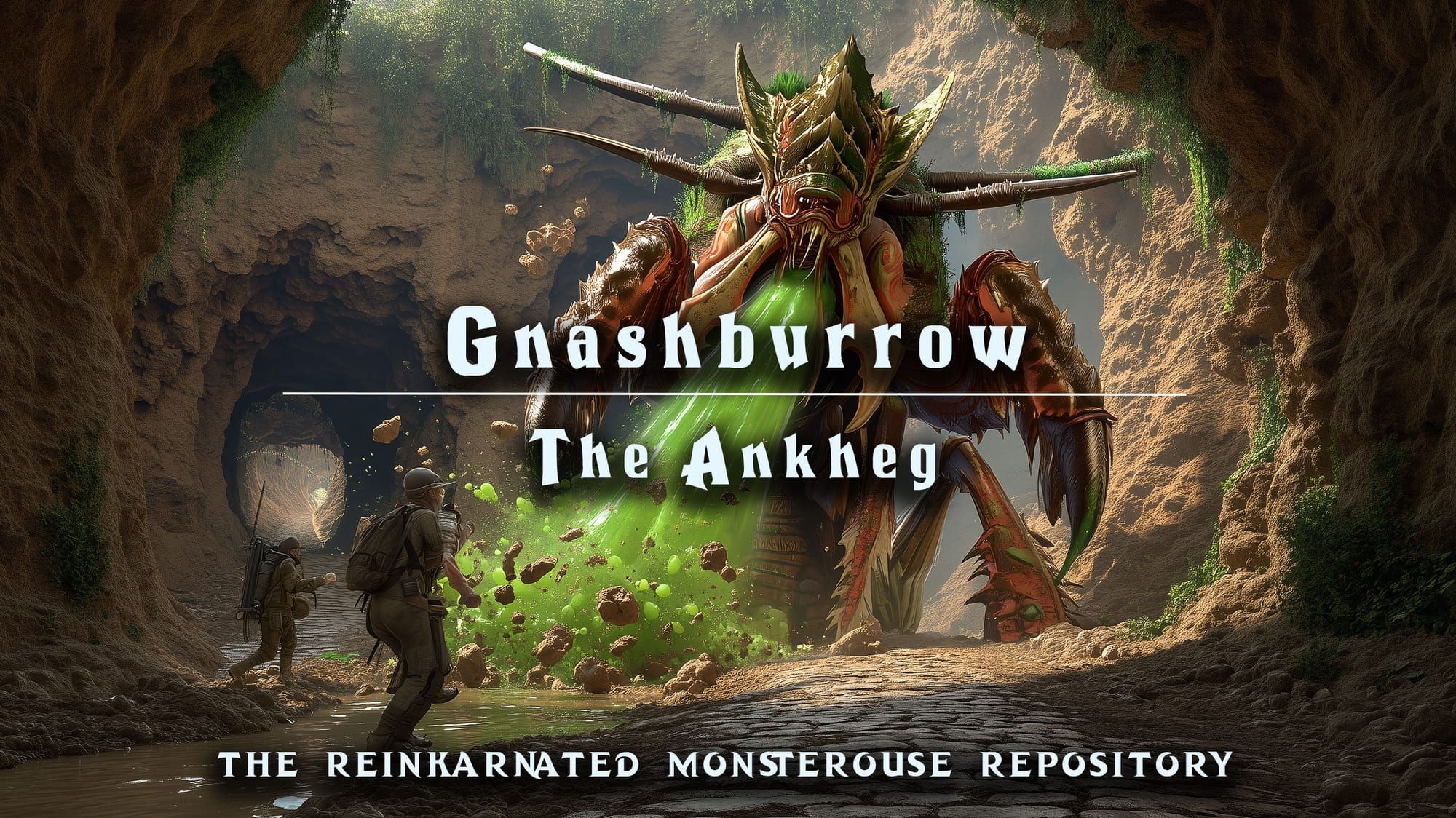
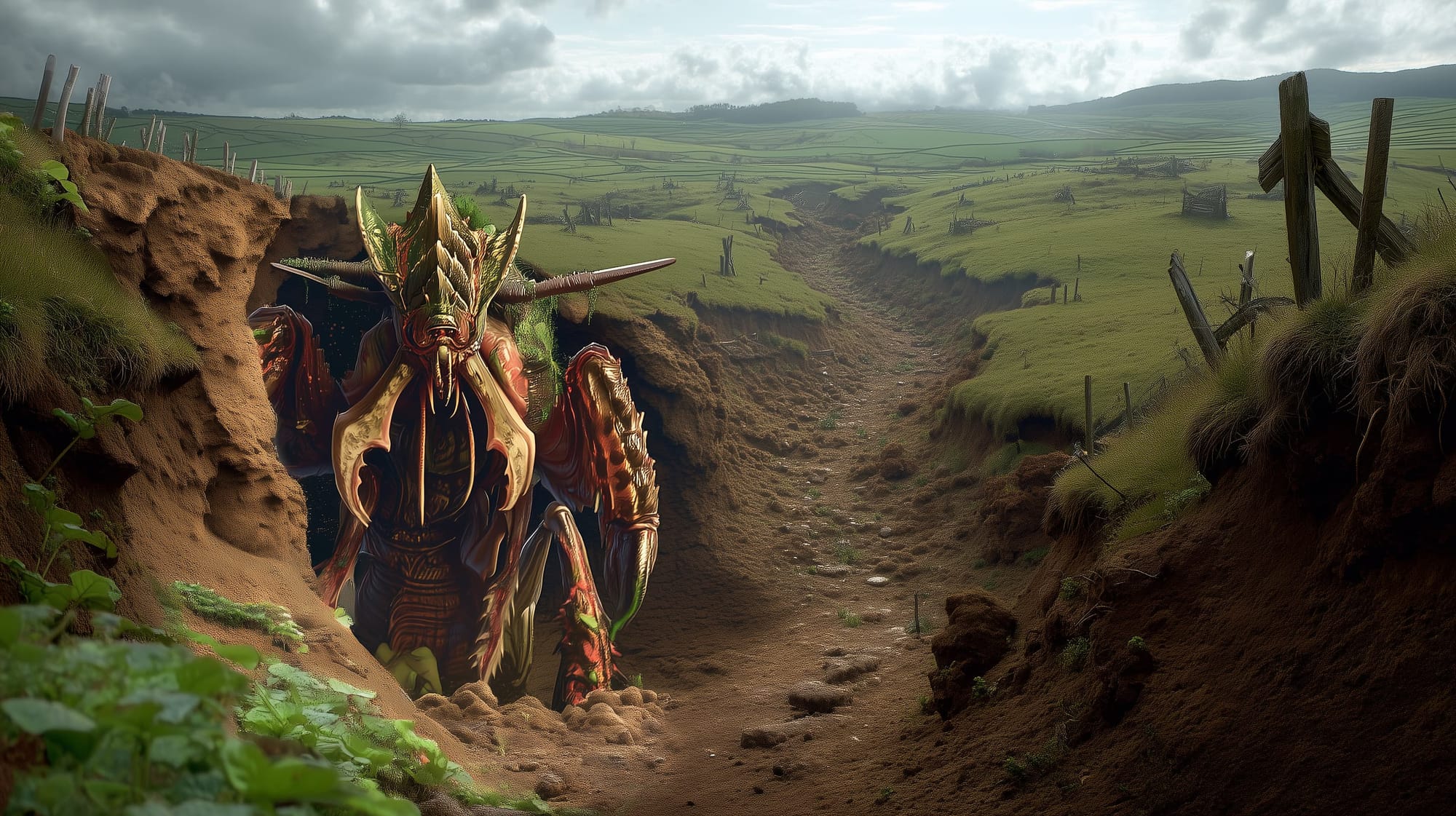
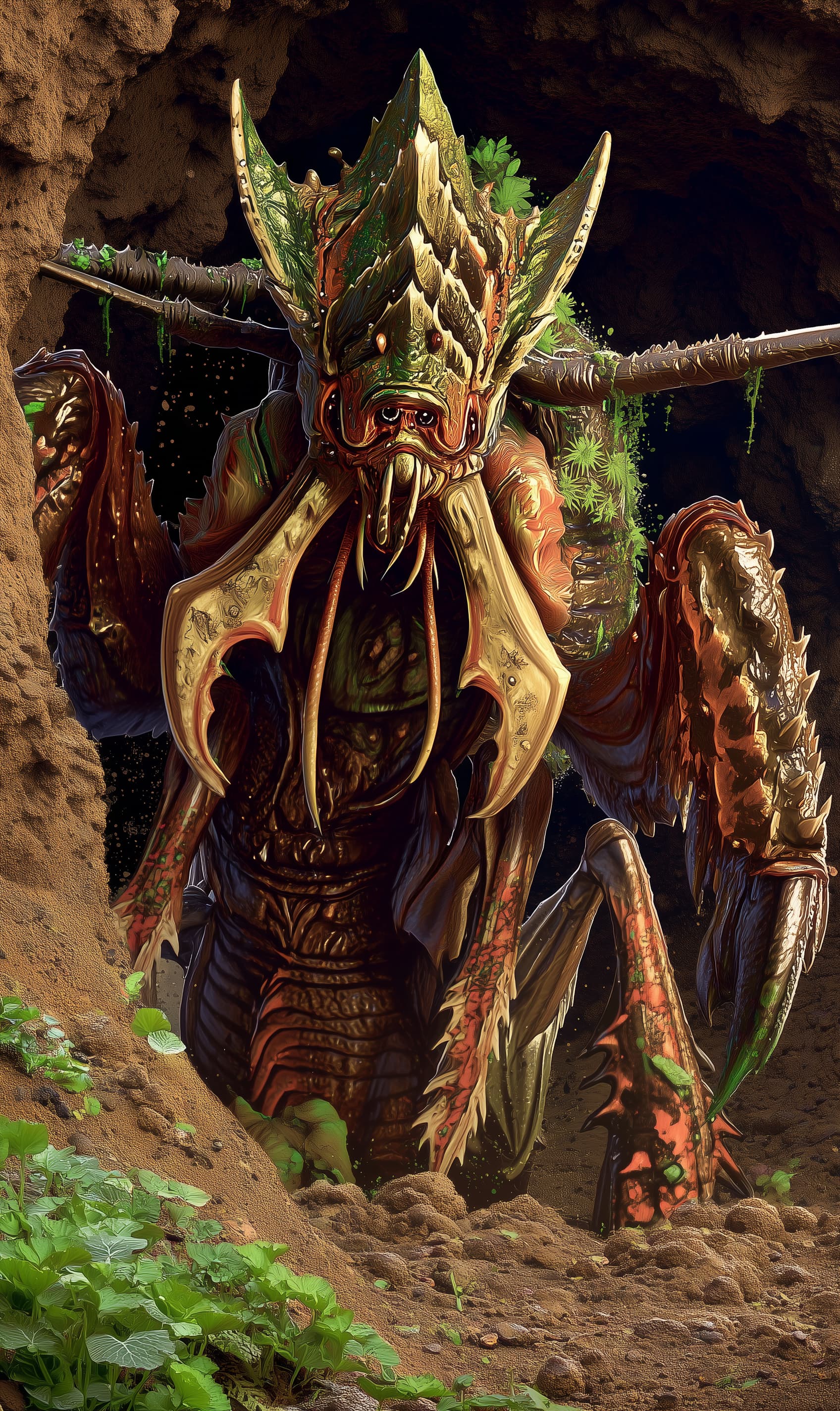
Known to locals as Gnashburrow, this unusually large and aggressive ankheg has become a subterranean terror beneath the Verdure Meadows, ripping up crops, devouring livestock, and tunneling so close to homes that entire buildings have collapsed into the earth.

Role in Its Society:
Ankhegs do not possess traditional societies, but Gnashburrow has unintentionally become the center of a growing nest. Other ankhegs—likely its offspring or opportunistic kin—follow its tunnels, scavenging from its kills and expanding its hunting territory. Locals believe it to be a queen, though it is not; it is simply the biggest and meanest.
Appearance Description:
Gnashburrow is larger than a draft horse, its dull carapace cracked with age and stained dark with earth and blood. Its mandibles are chipped and jagged, like old iron shears, and its antennae twitch constantly, tasting vibrations in the air. A broken arrow is permanently lodged in the chitin above one of its many dark eyes.
Backstory:
Gnashburrow was hatched beneath the ruins of an old druid circle in the eastern Verdure Meadows—where the land had once been magically enriched. That latent magic infused the surrounding soil with an unnatural fertility, which made the area a paradise for prey animals… and for predators like Gnashburrow. Over time, it grew too large to burrow quietly, developing more aggressive hunting patterns and creating a veritable labyrinth beneath the region.
Personality:
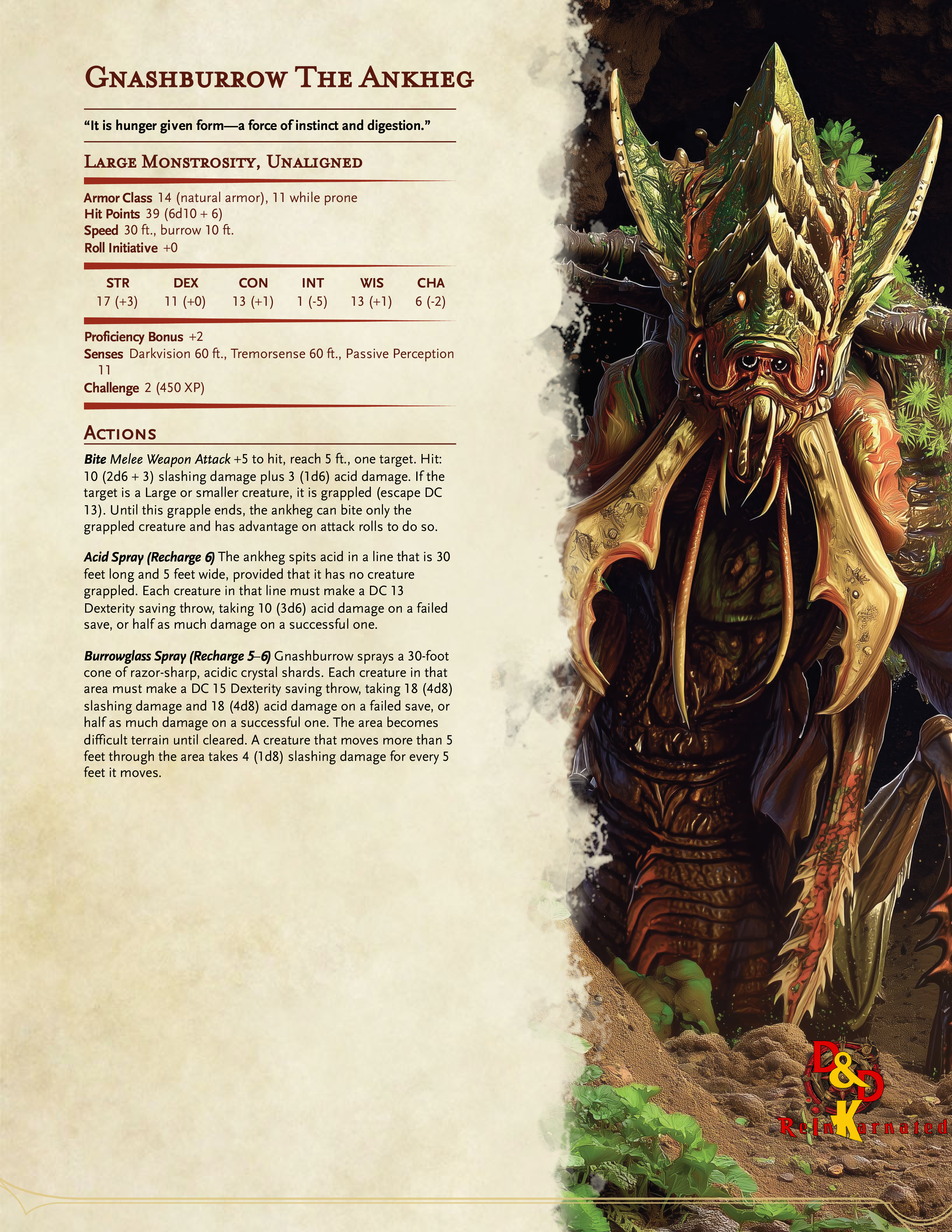
- Gnashburrow has no speech, no plan, and no malice. It is hunger given form—a force of instinct and digestion.
- Drawn to heat, sound, and motion.
- Becomes more aggressive when defending tunnel entrances.
- Loiters near acidic kill sites, attracted by the chemical residue.
Gear and Loot:
- Cracked Ankheg Mandible (weapon component): Can be crafted into a vicious sickle or pickaxe that deals additional acid damage.
- Enchanted Arrowhead (curio): The magical arrow embedded in its hide still radiates faint enchantment—useful in arcane tracking or unlocking old druid wards.
- Stomach Cache: In its gullet or near a recent kill site, one might find:
- Tarnished coins from a collapsed trade cart.
- A half-digested alchemical satchel (random potion vial survives).
- Bone-and-chitin talisman etched in Druidic, possibly linked to the ruins above.
Adventure Hooks:
- “The Tunnels Beneath” – A farmstead has vanished into a sinkhole overnight. Survivors claim the ground moved. The players must investigate before Gnashburrow returns to feed on what's left.
- “False Queen” – A local cult worships Gnashburrow as an avatar of the Earth Mother. They’re feeding it livestock—and eventually, people.
- “Burrowglass Bloom” – Alchemical flora has sprouted from the acidic soil of its tunnels. Valuable, yes—but someone must escort the botanist inside.
Roleplaying Tips:
- Use simple animalistic behavior when describing its actions—sniffing, sudden bursts of movement, erratic agitation when near fire or metal.
- Treat encounters with it like a mix between a landmine and a predator: tremors, sudden eruptions from the ground, followed by grappling, acid, and quick retreats into the soil.
- For non-combat scenes, emphasize the aftermath: scorched craters, chewed bones, ruined crops, and farmer fear.
Combat That Means Something
Introduction & Read-Aloud:
The ground quivers beneath your feet. First faintly—then violently—as soil ripples like water struck by a stone. A mound of earth bursts upward, spraying clods into the air. From the spray emerges a massive, chitin-plated predator, mandibles clacking like wet stone, acid hissing between them. Its many black eyes fix on you—not with thought, but with hunger.
🧠 Tactical Themes
- Hit-and-Burrow Strikes: Gnashburrow rarely stays above ground for long—erupting to attack before retreating underground, forcing players to anticipate and reposition.
- Acid Control Zones: Its spray not only damages, but leaves patches of acid-slick soil that deal lingering harm or make footing dangerous.
- Tunnel Ambushes: It may collapse sections of tunnel mid-fight to cut off escape or separate party members.
- Vibration Hunting: Loud movement or heavy impacts draw its attention; silent or still players can gain advantage on its detection rolls.
Narrative Twists
- Tunnel Collapse Countdown: The battle may take place in unstable caverns that collapse after a set number of rounds, turning victory into a race for survival.
- Kin Interference: Mid-fight, smaller ankhegs from the nest arrive—not as full combatants, but to harass, disrupt spells, or drag prey away.
- The Druid’s Legacy: The magical soil beneath the old druid circle reacts violently to acid—explosions of toxic spores or sudden root growth may occur if the battle shifts to certain areas.
Conclusion:
Gnashburrow is not a villain, not a schemer—it is the apex of an unnatural environment, a burrowing catastrophe driven by hunger and size. It provides DMs with a “natural disaster”-style monster, one that doesn’t need to talk to be terrifying. Whether fought beneath the soil, tracked through acid-scarred fields, or studied for its ties to ancient magic, Gnashburrow turns the idea of a “mindless beast” into something unforgettable.