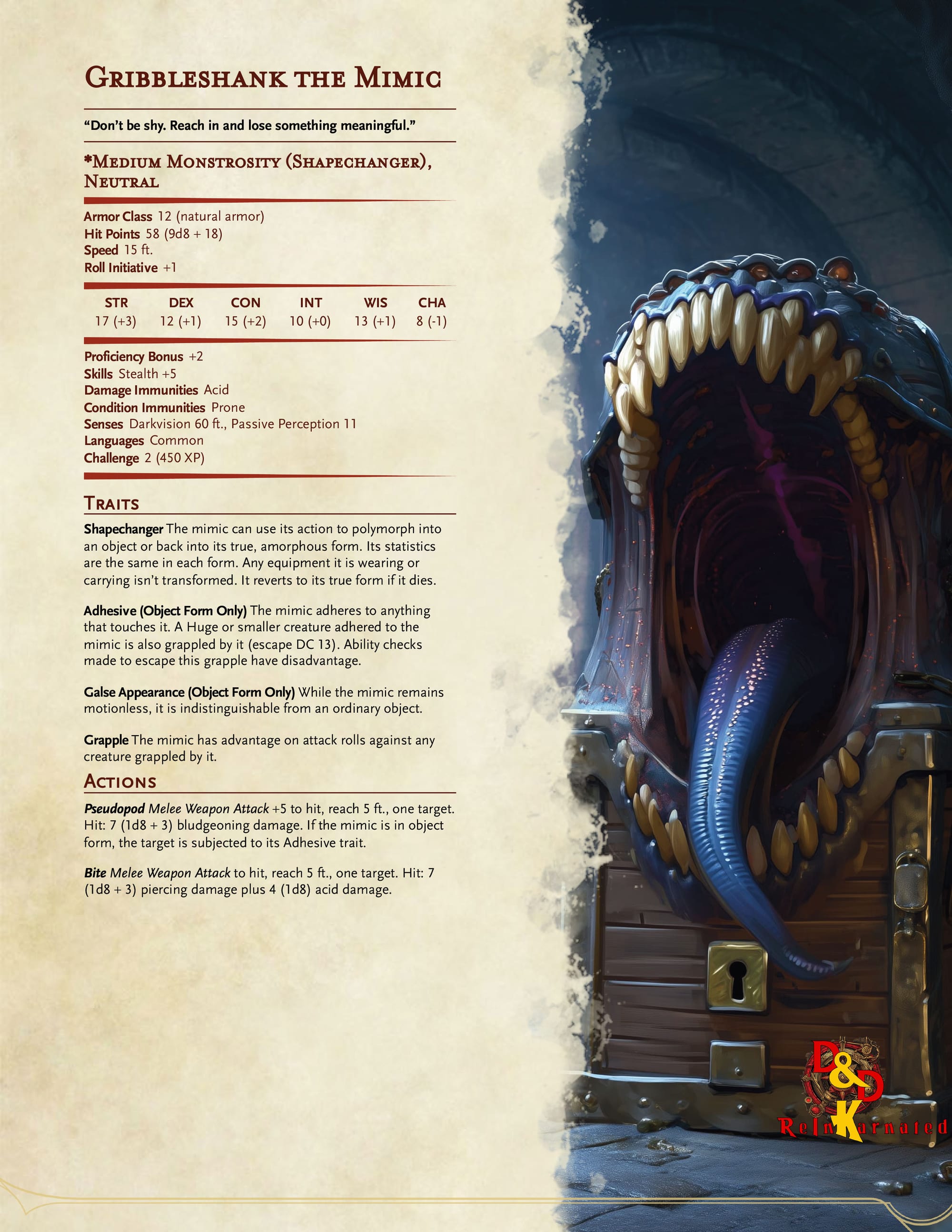
Gribbleshank - The Mimic
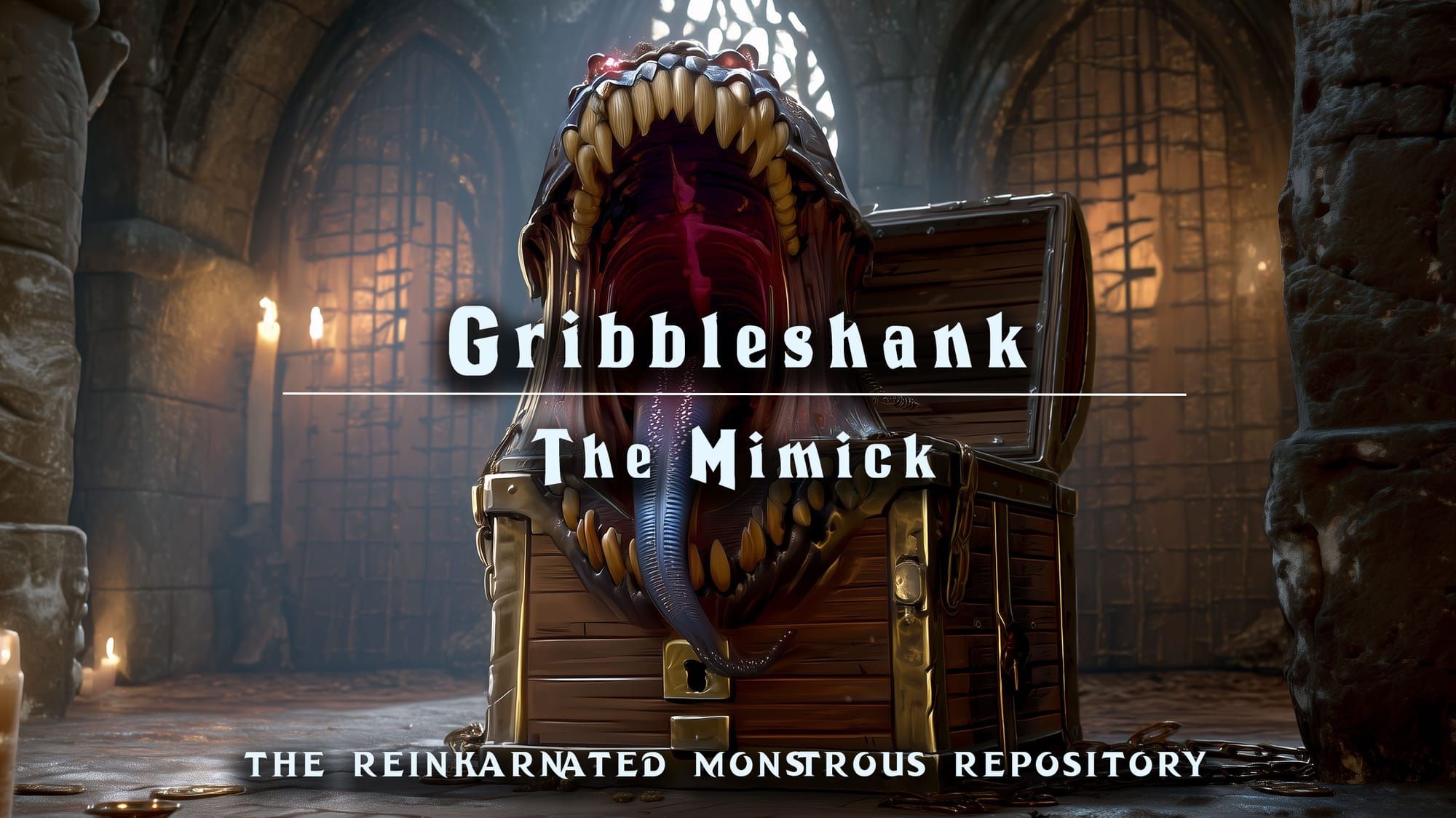
Gribbleshank lurks in the crypts of ancient ruins, expertly mimicking a worn but glittering treasure chest. Unlike common mimics, he possesses a biting wit, a nasty sense of humor, and an obsession with “deserving” tribute from those who enter his domain.

"You looked, you touched, you opened. Now it’s my turn."
Role in Its Society:
Mimics are solitary, but Gribbleshank considers himself a “border warden” and toll collector for the forgotten dungeon he’s claimed as home. He interacts with the occasional goblin scavenger or undead caretaker but rarely tolerates long-term neighbors unless bribed.
Appearance Description:
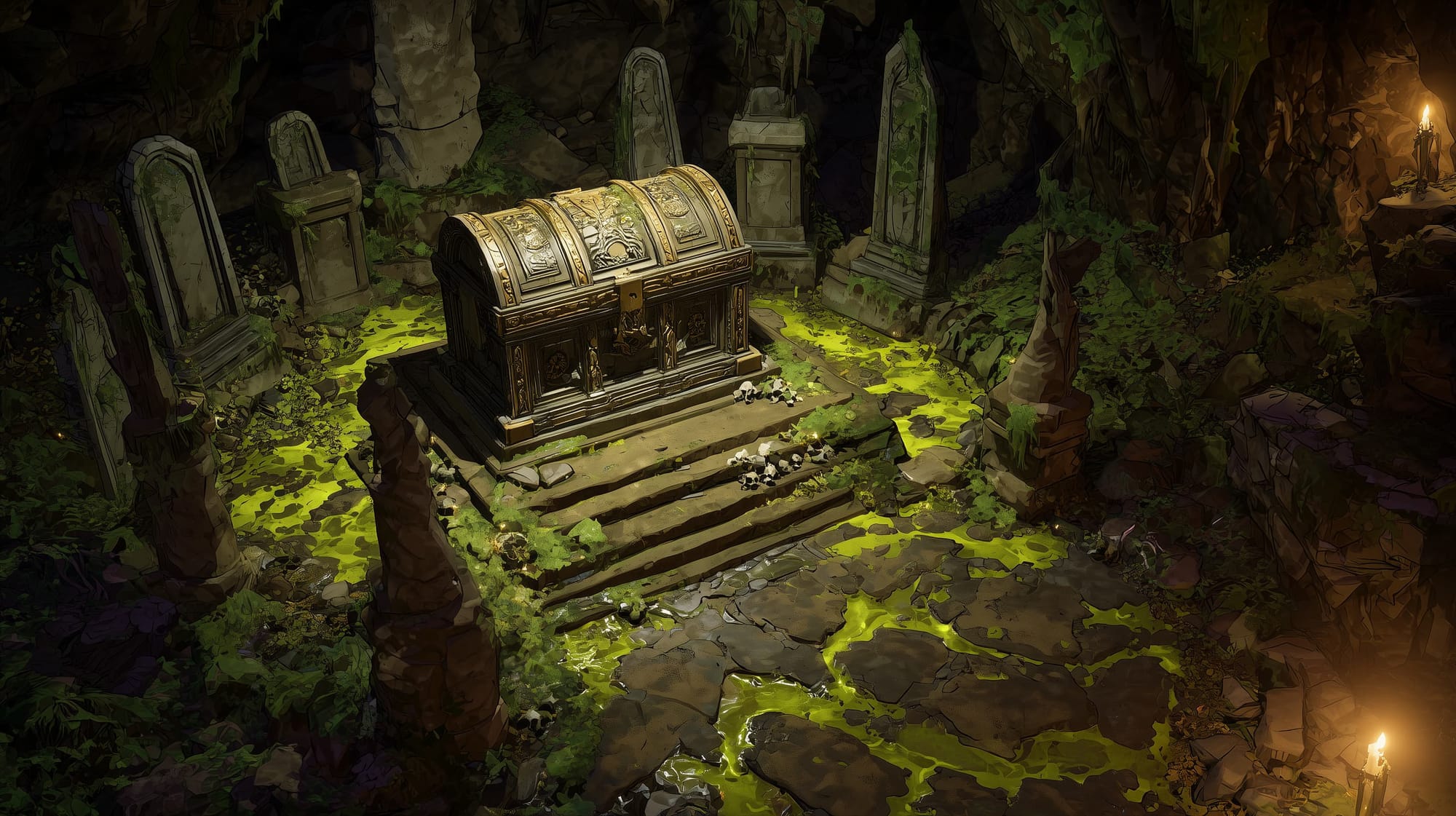
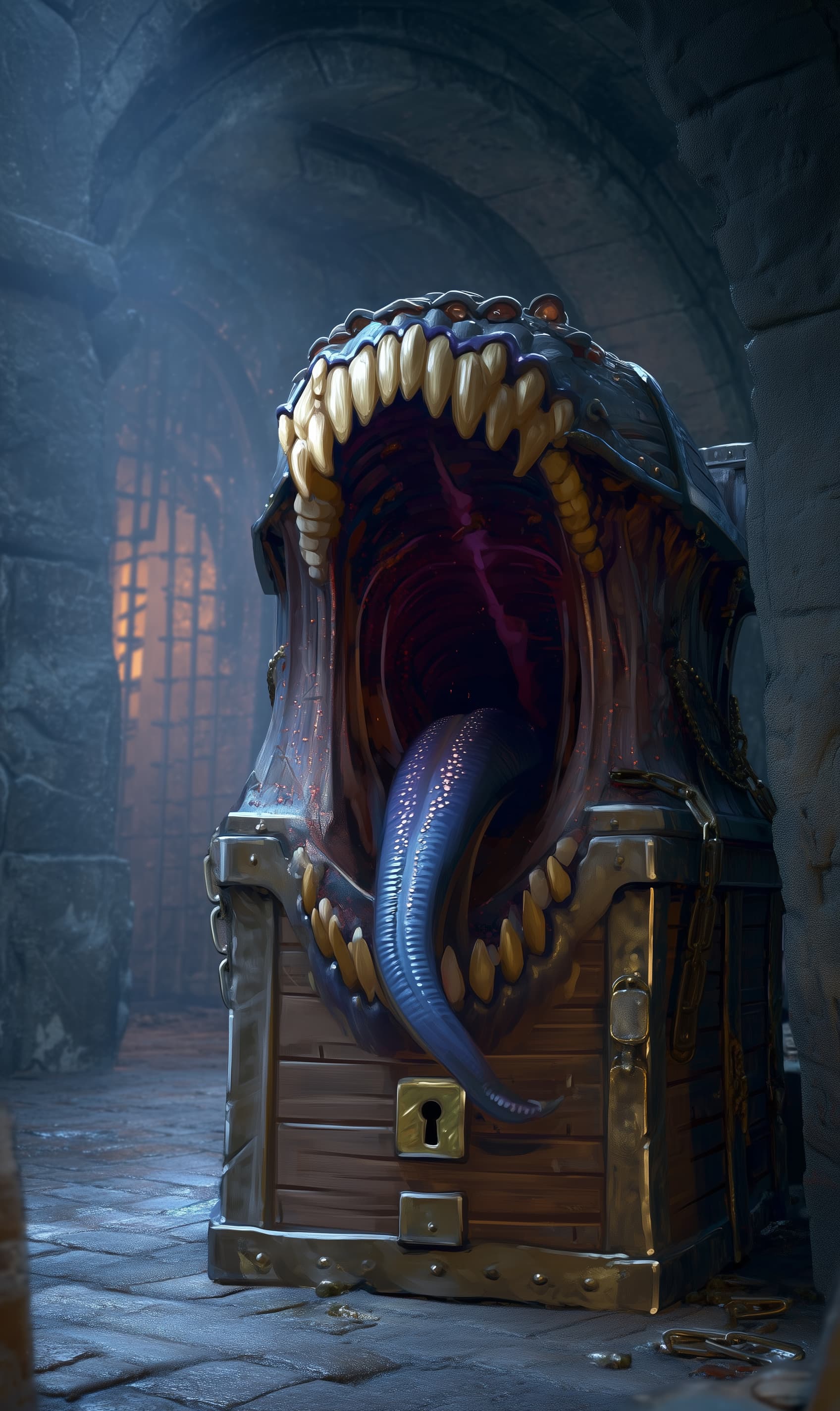
Gribbleshank’s default form is that of an old but oddly pristine wooden chest, wrapped in rusty iron bands with a tempting golden lock. When attacking or speaking, the lid splits open into a jagged, tooth-lined maw, and its stubby wooden legs sprout out to scuttle forward with surprising speed.
Backstory:
Spawned deep within an abandoned wizard’s tower, Gribbleshank developed an unusual fondness for storytelling and sarcasm by eavesdropping on adventurers who never made it back out. He eventually relocated to a ruined tomb where foot traffic was more regular. Over decades, he absorbed trinkets, bones, and words, gradually learning bits of language and forming a cynical worldview. Now, he sees himself not as a monster, but as a gatekeeper owed respect—and offerings.
Personality:
- “Don’t be shy. Reach in and lose something meaningful.”
- Snide and theatrical, especially when pretending to be just a chest.
- Highly territorial, viewing the dungeon and everything in it as his inheritance.
- Morally flexible, willing to strike deals with clever adventurers—if they amuse him.
Gear and Loot:
- 17 gold coins stuck in adhesive goo inside his maw.
- A partially digested elven locket (worth 50 gp, if cleaned).
- An enchanted brass ring with no magical effect (he thinks it’s important).
- Gribbleshank’s actual digestive juices are mildly acidic—valuable to alchemists if harvested properly (DC 15 Nature or Survival check).
Adventure Hooks:
- Mimic Tollbooth: The party must pass through a dungeon where Gribbleshank blocks the only clear path. He demands a riddle, tribute, or sacrifice—or he’ll attack.
- Lost Heirloom: A noble seeks a signet ring last seen in the maw of “a chest that bit back.” Gribbleshank still has it—and remembers the taste.
- Strange Ally: Gribbleshank offers the party secret knowledge of the dungeon’s traps and guardian routines—if one of them volunteers to be a temporary chew toy (nonlethal damage).
Roleplaying Tips:
- Speak slowly, oozing sarcasm and smug satisfaction.
- Begin conversations with long pauses, pretending to be inanimate.
- If amused or flattered, speak in riddles; if insulted, lash out immediately.
- Occasionally “cough up” coins to punctuate a sentence.
Combat That Means Something
Introduction & Read-Aloud:
The ancient chest at the center of the treasure room glitters with embedded gems and ornamental filigree. Its iron banding is rusted, its lock broken, and a half-lid yawns open as if some careless thief left it ajar. But as your hand reaches for the glimmering coins inside… the chest twitches. Then quivers. Then grins.
"I do so love when the appetizers come gift-wrapped in plate mail."
🧠 Tactical Themes
1. False Security and Psychological Control
Gribbleshank’s first attack is rarely physical—it’s psychological. He waits until the most loot-hungry or impulsive party member makes a move, then talks instead of striking. The delay builds tension. Some DMs may even roll initiative secretly behind the screen. When he finally attacks, it feels earned—and personal.
2. Disarm and Divide
With his Adhesive and Grappler traits, Gribbleshank focuses on one target, sticking fast and dragging them into a corner. He thrives on creating tactical imbalance, forcing the party to choose between freeing an ally or defending themselves.
- Primary Strategy: Isolate → Grapple → Bite → Goad.
- Weapon Targets: Gribbleshank intentionally grabs weapons, ruining them slowly. His acidic adhesion should eat away at a party favorite item if not stopped.
3. Change of Form Mid-Fight
Once injured, Gribbleshank will polymorph into another mundane item mid-combat—maybe a piece of gold, a dagger, or even a spare boot—and slide into a pile of actual loot. When he reappears (ideally behind a caster), it’s as both a combat threat and a narrative beat.
4. Cowardly Bargainer
When Gribbleshank drops to 25% HP, he always tries to parley. He’ll offer riddles, secrets, or even lead the party to “better treasure” (that he has no intention of actually sharing). He knows most adventurers can’t resist a mystery or a deal—and if someone takes the bait, the rest of the fight becomes a trust issue among party members.
Narrative Twists
- Sentimental Hoarder:
Among the gold are odd objects: a child’s toy, a love letter in Goblin, a half-burnt spellbook. These are “souvenirs” from past victims. Let the players find something personal or curious—perhaps even a connection to an NPC they met earlier. - The Lying Loot:
Gribbleshank claims to know the location of a greater hoard “guarded by something worse than me.” It might be true—or it might be his spawn. Either way, if the party spares him, it opens a future narrative thread. - Gribbleshank Returns:
If he escapes, Gribbleshank may return later—disguised as a different object entirely. Perhaps in a rival guild hall. Or in a PC’s room at an inn. He doesn’t forgive or forget—but he does admire persistence.
Conclusion:
Gribbleshank is more than a monster in a box—he’s a bitter relic of dungeon ecology with a chip on his lid and gold on his tongue. Whether the party opens him expecting treasure or bargains for their lives with clever banter, this mimic leaves an impression few adventurers soon forget—assuming they get away with all their fingers.