Kargath's Remnant - The Bound Guardian
He isn't guarding gold. He's asking if you understand what you're asking the mountain to become.
Role in Its Society
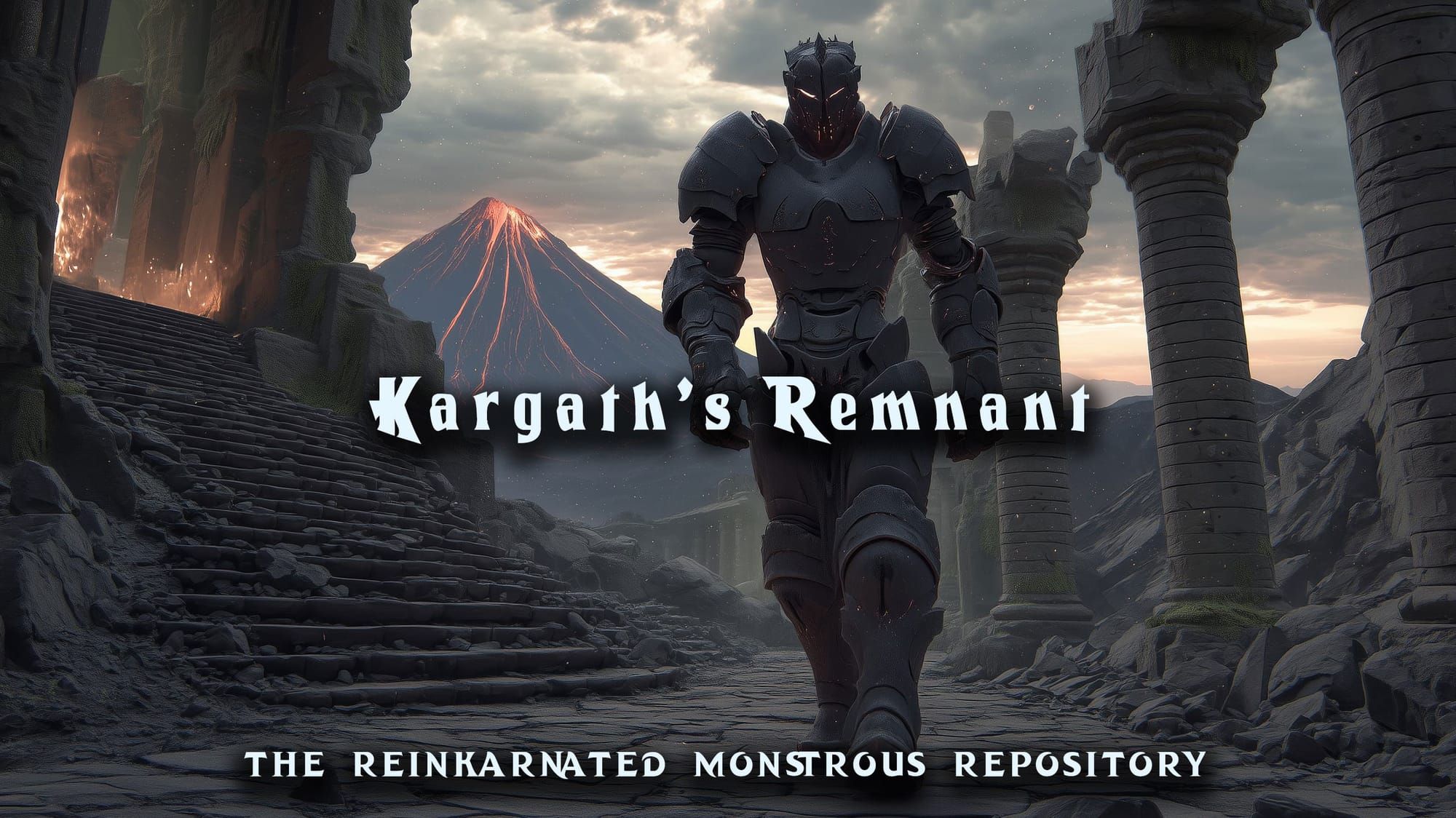
Deep beneath the Ashen Plains of Emberfall Valley, in the half-buried temple ruin known as the Emberfold, something waits that was never meant to rest. Kargath's Remnant is not a ghost, not a giant, and not, strictly, a person anymore — it is the bound echo of a fire giant warlord who once commanded the tribes and forge-camps of that stretch of Mount Vendetta's foothills, poured into a construct shell of plate and ember-cracked iron and set to a single, unbreakable purpose: no one claims what he once carried unless they have first proven they deserve to.
The locals who farm the ash-fertile edges of the Plains don't call it a monster. They call it the Warden of the Fold, and they leave it alone, because it has never once come looking for them. It has no army, no court, no interest in the valley beyond the crypt it was bound to guard. Adventurers, treasure-hunters, and the occasional ambitious warlord are a different matter — and lately, there have been more of them than usual, ever since a tremor off Mount Vendetta cracked open a stairwell that had been sealed for longer than anyone in the valley can put a number to.
It shares its ruin, uneasily, with older dangers. The upper chambers and ash-choked colonnades of the Emberfold are prowled by an Ashrunner — one of the sleek, ash-camouflaged cats that call the Plains home — and most who die in these ruins never make it far enough to meet Kargath's Remnant at all. The Remnant does not consider the cat competition, rival, or ally. It simply doesn't come up. Its purpose begins at the sealed stair to the lower crypt, and nothing above that line concerns it.
Appearance Description
Kargath's Remnant stands roughly nine feet of scorched and dented plate, built along the frame of the giant whose echo it carries — too broad through the shoulders to be mistaken for armor with nothing inside it, too still to be mistaken for anything alive. The plate has the deep, oxidized black of iron that has cooled from a forge fire a thousand times over, and where the metal has cracked — at the joints, along old sword-scars across the breastplate — a dull orange-red glow shows through, brightening and dimming faintly in something almost like a heartbeat.
Fine grey ash sifts constantly from the gaps in its armor, settling in a thin ring wherever it stands still for long enough, so that some of the temple's oldest floors show pale outlines where the Remnant has kept a decades-long vigil in the same spot. It carries a longsword scaled for a giant's grip but wielded, in this body, with a human-sized economy of motion — no wasted swings, no wild giant's fury, only the exact and unhurried violence of something that has done this before and expects to do it again. Its shield bears a device too worn to read: a crown, or a mountain, or both, ground nearly featureless by centuries of ash and handling.
It does not have eyes so much as points where the ember-light behind the visor slits burns a little brighter when it turns its attention toward something. That attention is the first sign, for most visitors, that the statue they walked past was never a statue.

Backstory
Long before the Ashbound forge-priests raised their foundries elsewhere in Emberfall Valley, the Emberfold was a working fire temple, built by an order of priests who served a fire giant warlord the old inscriptions name only as Kargath — a war-leader who held the tribes of that stretch of Mount Vendetta's slopes under a single, iron-fisted authority, and whose priesthood tended the temple's fires in his name and, eventually, in his image. What Kargath commanded and how he commanded it is mostly lost; what survives, scratched into the crypt walls in a hand that changes partway through, is that the priests who served him came, in time, to fear him more than they revered him — and that fear became the plan that ended him.
The betrayal is not detailed on the walls. What is detailed is the aftermath: the priests sealed the temple's lower crypt, and with it, the Ashen Crown — the artifact of Kargath's authority over his tribes and, the older carvings imply, some measure of authority over the mountain's own moods. They did not destroy the Crown. They could not, or would not. They hid it, and bound what remained of the warlord's will into a construct shell to stand over it forever, less as an honor to him than as insurance against anyone, ever, trying to pick up what he had dropped.
Whether that binding was meant as punishment, imprisonment, or the only mercy the priesthood had left to offer a warlord they'd murdered is a question the ruins don't answer, and Kargath's Remnant has never been asked in any language its questioners understood. What is certain is that it has held that crypt through every tremor Mount Vendetta has produced since — until three months ago, when a stronger one than usual cracked the ancient stairwell open at last, and pilgrims, scholars, and treasure-seekers began finding their way down toward a guardian that had not had a visitor in longer than the valley's oldest families can remember.