Castle Ravenloft - Larders of Ill Omen
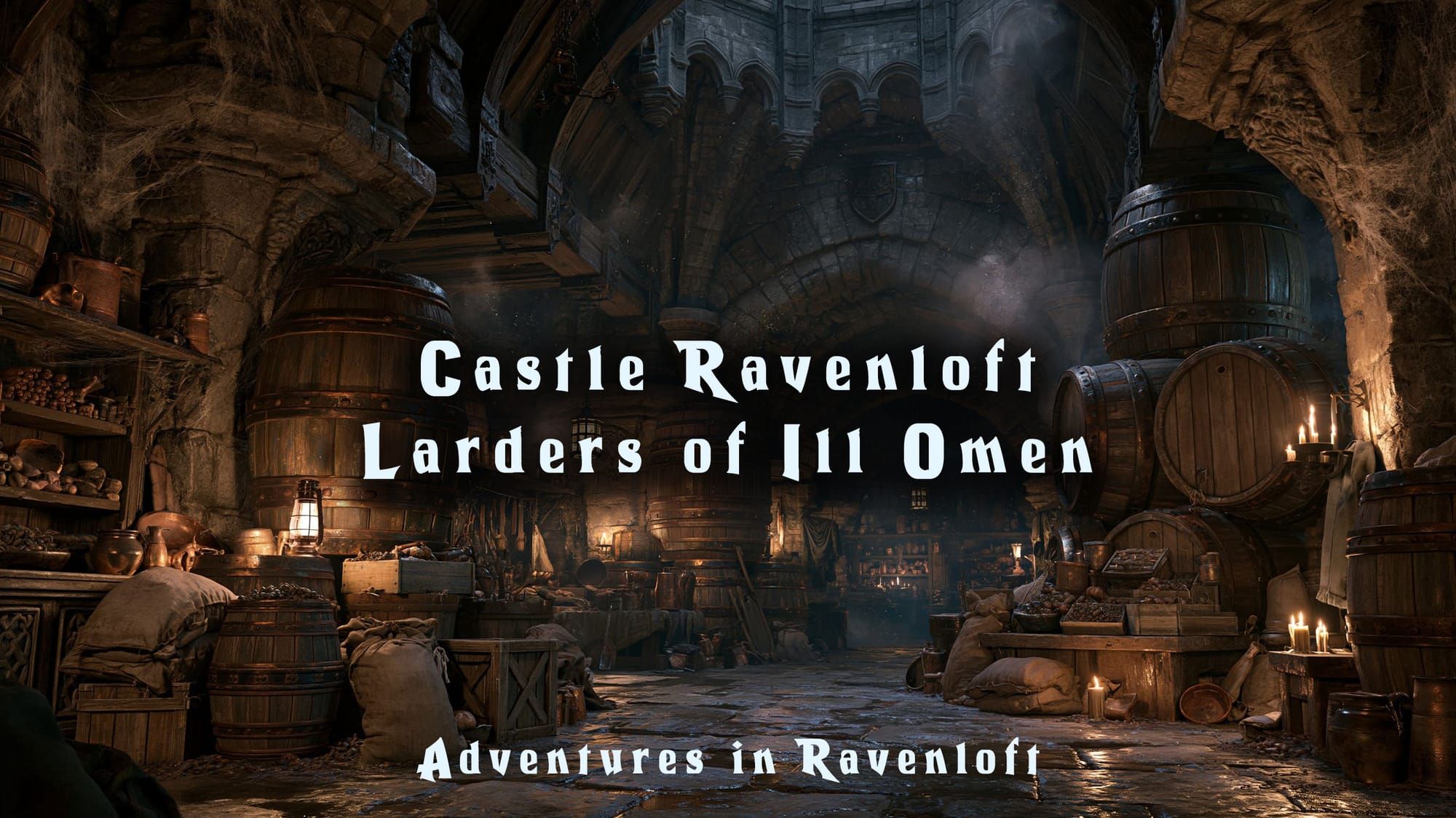
The Larders of Ill Omen expose the hidden body of Castle Ravenloft, where wine cellars, servant routes, and lower workspaces reveal the grim machinery beneath the castle’s noble façade.
The Larders of Ill Omen reveal Castle Ravenloft at its most practical, secretive, and grim. If the halls above preserve pageantry, memory, and aristocratic display, the lower service levels preserve the invisible work that once sustained the entire stronghold. These are the passages and chambers where food, drink, firewood, tools, and labor once moved unseen beneath the notice of guests and nobility. In a living castle, such spaces would be forgettable. In Ravenloft, they become some of the most unsettling rooms in the entire complex.
What makes this subchapter so effective is that it strips away much of the theatrical grandeur found elsewhere in the castle and replaces it with something colder and more intimate. The horrors here do not rely on towering scale or dramatic spectacle. They emerge from the fact that Ravenloft is still, in its own way, functioning. Supplies are still stored. Rooms are still tended. Servants still move through hidden spaces. The castle’s daily life has not ended. It has only become monstrous.

High above the halls and chambers below, the upper reaches of Castle Ravenloft trade ceremony for isolation, turning stairwells, rooftops, and tower chambers into a realm of vertigo, supernatural power, and private dread.
The Rooms of Weeping reveal Castle's most intimate and unsettling state, where sorrow, obsession, and memory cling to every chamber. Rotting wedding feasts, haunted music, hidden treasuries, and private rooms steeped in longing turn this section of the castle into a gallery of Strahd’s grief.
The Court of the Count reveals Castle Ravenloft not just as a haunted stronghold, but as the functioning seat of Strahd’s rule. Audience halls, hidden passages, false terrors, and loyal servants turn this section of the castle into a place where ceremony and control work hand in hand.