Castle Ravenloft - Main Floor
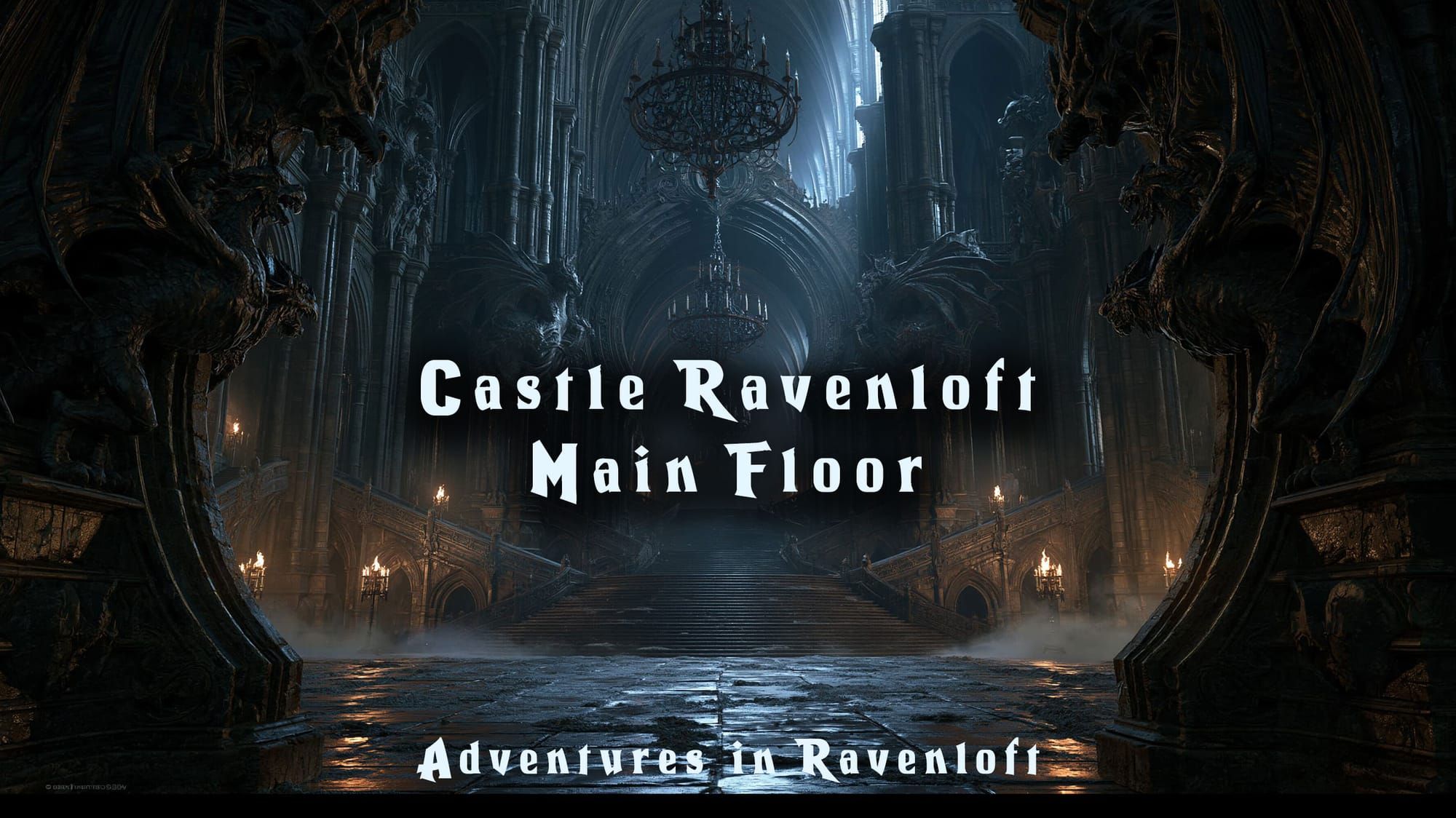
The Main Floor of Castle Ravenloft is the castle’s grand performance of welcome—vaulted halls, sweeping stairs, and a banquet chamber lit for honored guests.
The Main Floor of Castle Ravenloft is where the castle first reveals its full personality. If the outer walls are Ravenloft’s warning, the main floor is its performance. Great doors open of their own accord. Organ music rolls through the halls. Vast staircases, dragon guardians, bronze doors, chapels, banquet chambers, and towering entry spaces all combine to create the illusion of noble welcome. But like everything else in Strahd’s domain, that welcome is false.
This section of the castle is one of the strongest examples of Ravenloft as a living stage. Every room is designed to direct the characters’ attention, movement, and emotion. The architecture is grand and ceremonial, but it is never neutral. Statues become guardians. Dining becomes entrapment. Sacred spaces hold relics and corpses in equal measure. Even the seemingly empty halls feel poised to respond. The main floor is not simply the first interior level of the castle. It is Ravenloft introducing itself.

The Rooms of Weeping reveal Castle's most intimate and unsettling state, where sorrow, obsession, and memory cling to every chamber. Rotting wedding feasts, haunted music, hidden treasuries, and private rooms steeped in longing turn this section of the castle into a gallery of Strahd’s grief.
The Court of the Count reveals Castle Ravenloft not just as a haunted stronghold, but as the functioning seat of Strahd’s rule. Audience halls, hidden passages, false terrors, and loyal servants turn this section of the castle into a place where ceremony and control work hand in hand.
The imposing entry to Castle Ravenloft, thunder, rain, and sheer stone heights set the tone for everything to come. The outer walls and courtyards are more than a first impression—they are a warning that Strahd’s home was built to intimidate, isolate, and endure.